Microplastics Analysis: Reliable Detection Methods
What is a microplastic?
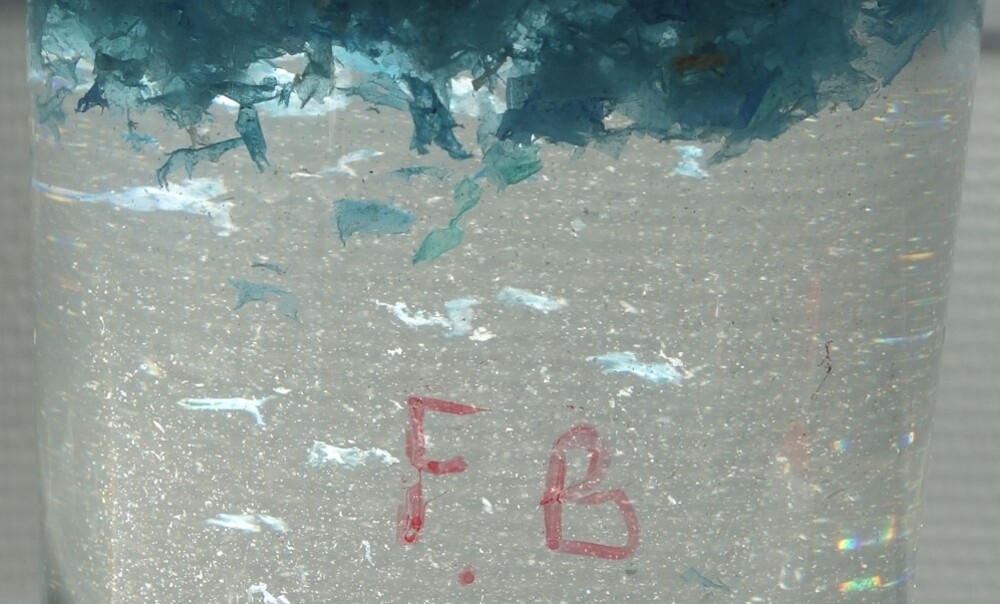
Microplastics are plastic particles smaller than 5 mm. They originate either from the degradation of larger plastic materials or from specific industrial production processes.
Several types of microplastics can be distinguished:
- fibers
- fragments
- films
They are also composed of various polymers such as polyethylene (PE), polypropylene (PP), and PET.
Their identification mainly relies on their chemical signature, which can be determined using analytical techniques such as infrared spectroscopy (FTIR). This step is essential to:
- differentiate plastics from other particles,
- understand their origin,
- meet increasing requirements in terms of quality and environmental compliance.
How to identify microplastics in water?
The analysis of microplastics in aqueous matrices requires a rigorous methodology.
1. Sample preparation
Water samples are first:
- filtered to concentrate particles,
- then treated to remove organic matter that could interfere with the analysis.
2. Particle analysis
The isolated particles are then analyzed using:
- FTIR imaging
- or Raman spectroscopy
These techniques make it possible to identify each microplastic individually and determine:
- its chemical composition,
- its size,
- its morphology.
3. Data processing
The results are interpreted using:
- polymer databases,
- advanced algorithms.
This enables automated and reliable identification, even at very low concentrations — a key point for environmental and industrial analyses.
How to identify microplastics in solid matrices?
The analysis of microplastics in solid matrices (soil, dust, materials) involves additional steps.
1. Particle extraction
Samples undergo various treatments:
- density separation
- chemical digestion
- controlled grinding
These steps allow efficient extraction of plastic particles.
2. Analysis and identification
Once isolated, microplastics are analyzed using:
- FTIR
- or Raman spectroscopy, often coupled with automated imaging
This approach makes it possible to analyze a large number of particles simultaneously, improving the representativeness of the results.
3. Data processing and interpretation
Identification relies on:
- comparison of obtained spectra with polymer libraries,
- automated data processing.
Result : fast, reliable, and reproducible characterization, even in complex matrices.
Why choose OSE Services?
OSE Services supports you at every step to detect and identify microplastics with precision, in compliance with international standards.
✔ Technical support
Definition of protocols tailored to your matrices and objectives (water, air, solids, products).
✔ On-site intervention
Sampling, audits, and measurement campaigns carried out directly at your facilities.
✔ In-depth investigations
Identification of contamination sources and optimization of your industrial processes.
✔ Scientific expertise
Interpretation of results, regulatory support, and assistance in case of non-compliance.
✔ Laboratory analyses
Advanced analyses using FTIR and Raman spectroscopy with automated data processing.
Standards and frameworks applied to microplastics analysis
OSE Services relies on major international directives and standards governing microplastics identification, particularly via FTIR:
- European Directive 2020/2184 (quality of water intended for human consumption)
- ASTM WK87463 (microplastics analysis methodology)
- ISO 4484-2:2023 (microplastics analysis in water)
- ISO 24187:2024 (general principles for microplastics characterization)
- ISO 16094:2025 (advanced analytical methods for microplastics)
Our objective
To provide you with reliable results to:
- detect microplastics,
- identify them accurately,
- control contamination risks.
Need support?
Contact our teams for a personalized study and tailored support adapted to your industrial and environmental challenges.